Maybe the life you were handed was never supposed to be the final draft.

We inherit stories about who we're supposed to be, how relationships should look, what success means, what our bodies should do, and which parts of ourselves are easier for other people to accept.

Somewhere along the way, those stories can start to feel like rules.

Unscripted Therapy Center was built around a different idea: you are allowed to question them.

You are allowed to get curious about what fits, what doesn't, and who you are becoming when you're no longer trying so hard to follow someone else's script.

Your story is still yours.
There isn't one path you're supposed to follow.

Most of us are handed scripts long before we're old enough to question them.

Be good. Be successful. Find the right person. Build the right kind of relationship. Want the right things. Make choices other people understand.

Sometimes those scripts fit.

And sometimes you wake up realizing you've gotten really good at living a life that doesn't quite feel like yours.

Unscripted isn't about throwing away every story you've been given. It's about giving yourself permission to decide which ones you want to keep.

There may be paths you continue down. Others you leave. Some you circle back to. And sometimes you make a path where one didn't exist before.

You have choices.

Woodland paths branching in different directions through a mossy landscape
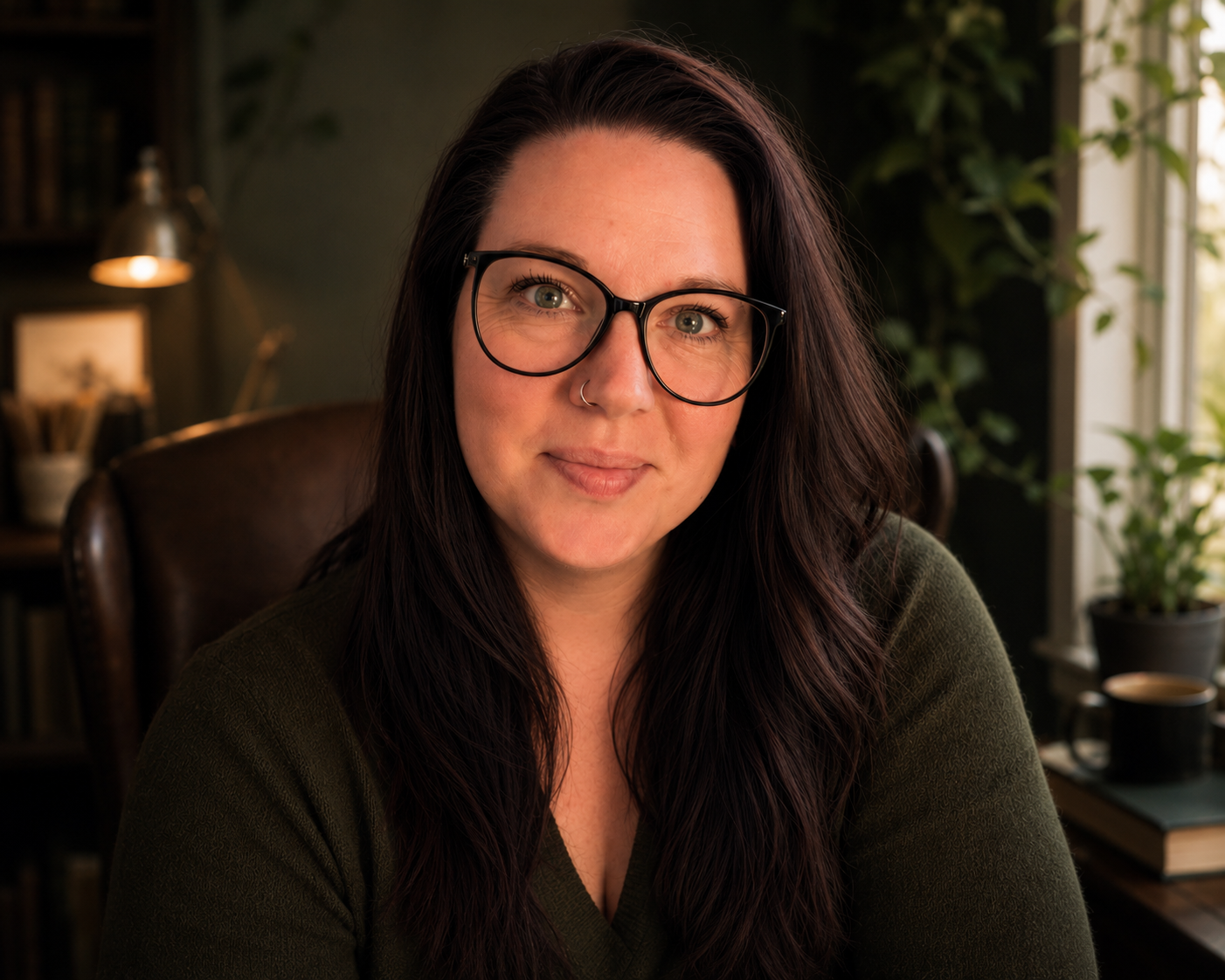
Portrait of Deborah Sarmir

Deborah Sarmir, LMFT Associate (she/her)
Supervised by Joyce Miles Jacquote, LMFT-S

Hi, I’m Debbie.

For a long time, I thought being “good” meant getting really good at reading the room.

I learned how to notice what people needed, adapt, keep the peace, and become the version of myself that made the most sense in whatever space I was in.

I was the helper. The quiet one. The creative one. The person people told things to.

And somewhere along the way, I realized that constantly trying to understand everyone else had left me with a much harder question:

Who was I when I wasn't trying to be who I thought I was supposed to be?

That question didn't come with one clean answer. Honestly, I don't think it's supposed to.

The person I am is still evolving. So is the therapist I’m becoming. And I believe you deserve room to evolve, too.

My own experiences with neurodivergence, identity, shame, and questioning inherited stories shape the way I show up in the therapy room—not because our stories are the same, but because I understand how heavy it can feel to keep performing a version of yourself that no longer fits.

I won't make you guess what I'm thinking.

Therapy with me is conversational, curious, and collaborative.

I ask questions. I notice patterns. I may gently point out when the story you're telling me about yourself doesn't quite match the person I'm getting to know.

Sometimes we'll slow down and sit with something uncomfortable. Sometimes we'll pull apart a pattern that's been running quietly in the background for years. And sometimes we'll laugh because being a person is objectively weird.

I don't believe my job is to tell you who to be, what your relationship should look like, or which version of your life is the “right” one.

My job is to help you hear yourself more clearly.

I draw from systemic, experiential, narrative, and emotion-focused approaches, but I don't expect you to learn therapy jargon or fit yourself into a model. The work should make sense for the person—or people—actually sitting in front of me.

You don't have to be the exception here.

A lot of people get really good at figuring out whether a space was actually built with them in mind—or whether they'll be expected to quietly adapt once they get there.

Unscripted was intentionally created for people, relationships, identities, bodies, and ways of living that don't always fit neatly into the default script.

Queer and trans people. Neurodivergent people. Polyamorous and ethically non-monogamous relationships. Kinky people and those exploring BDSM or power exchange. People questioning their identity, their relationships, their sexuality, or the expectations they've spent years trying to meet.

You are not a complication I need to work around.

You don't have to make yourself easier to understand before you walk through the door.

Therapy doesn't happen in a vacuum.

The way you understand yourself didn't develop out of nowhere.

Families, relationships, communities, culture, identity, expectations, and the experiences you've lived through all shape the stories you carry about who you are and how you're supposed to move through the world.

As a marriage and family therapist, I look at patterns and systems—not because everything is your parents' fault… but because context matters.

We may get curious about where a belief started, what a pattern has helped you survive or protect, and whether it still fits the life you're trying to build now.

Understanding where something came from doesn't mean you have to keep carrying it.

My clinical work is informed by systemic and relational therapy, Emotionally Focused Therapy, Narrative Therapy, and experiential approaches. I work collaboratively and adapt therapy to the person or relationship in front of me rather than expecting you to fit neatly into one model.

You don't have to know who you're becoming before you begin.

You can show up with the version of the story you have right now.

The questions. The contradictions. The parts that make sense and the ones that don't.

We can start there.